2 min read
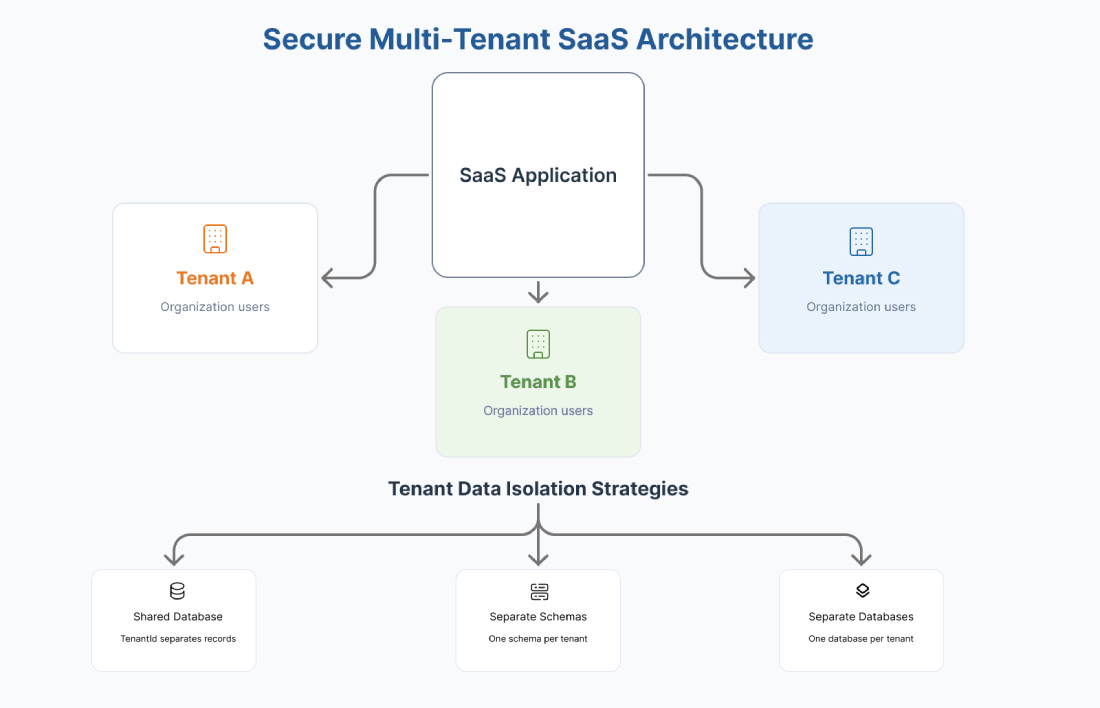
Building Secure Multi-Tenant SaaS Applications
A practical look at tenant isolation, authorization, data boundaries and the mistakes that can expose customer data.
How to structure multilingual content, maintain consistent navigation and create accessible experiences across languages and devices.
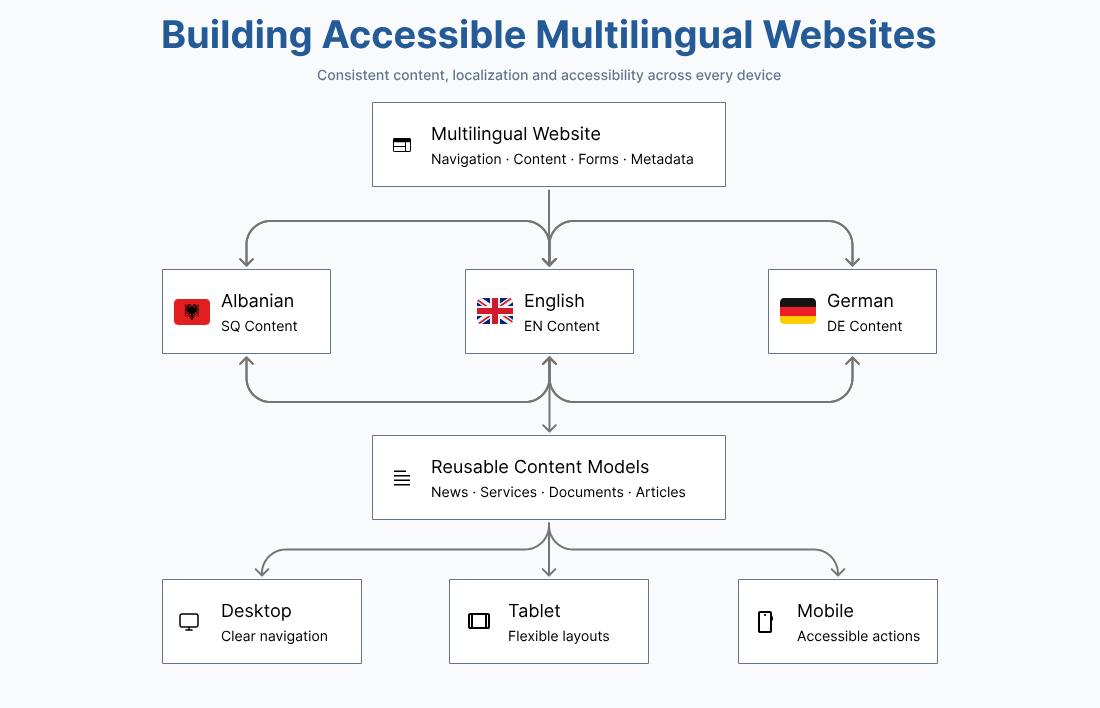
Multilingual websites need more than translated text. Content structure, navigation, accessibility and responsive behavior must work consistently across every supported language.
News, articles, services and documents should use consistent content models instead of manually formatted pages.
Reusable structures make content easier to maintain, translate and display across different parts of the website.
Navigation, forms, validation messages, metadata and dynamic content all need a clear localization strategy.
Language switching should keep users on the corresponding page whenever a translated version exists.
Headings, links, form labels, keyboard navigation and alternative text should remain clear across all supported languages.
Translated content should not break layouts or make important actions difficult to understand.
Translated labels and headings can be significantly longer than the original text.
Layouts should adapt to longer content and remain usable on mobile, tablet and desktop screens.
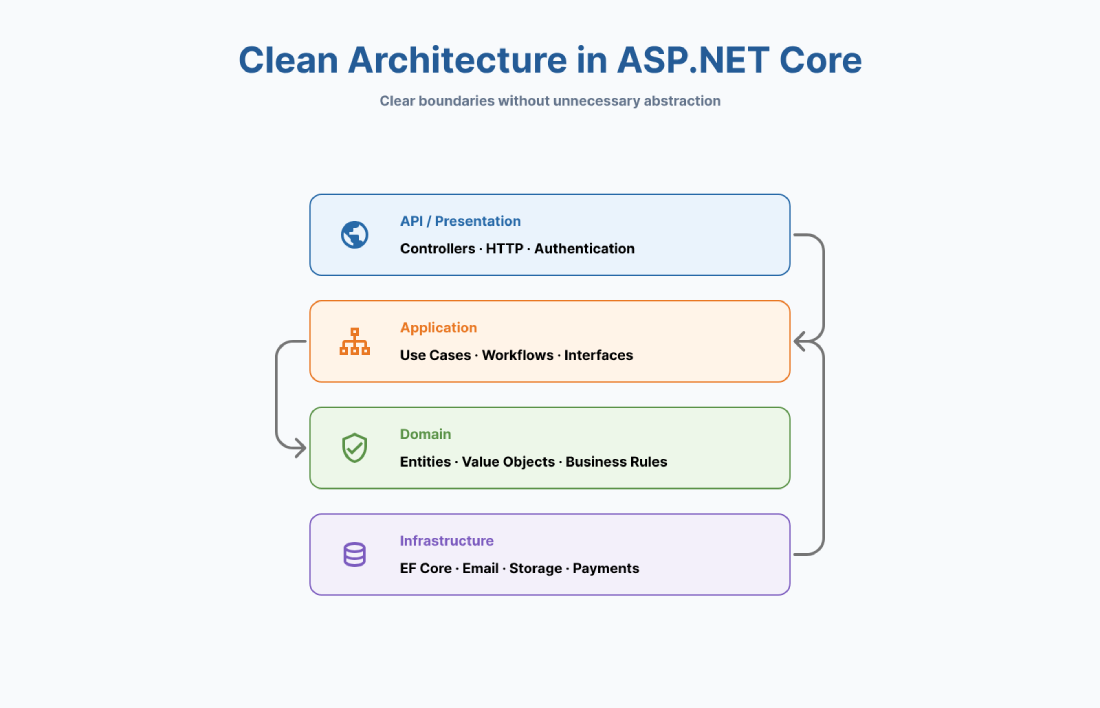
Strong software architecture is not about adding the most layers. It is about protecting the boundaries that matter.
Use reusable content structures.
Plan localization before building page templates.
Test accessibility in every supported language.
Design layouts that support different text lengths and devices.
Planning a related product? Explore FCODE's web development services.
Tell us what you are building and which technical problems you need to solve.
Continue reading about software architecture and delivery.
A practical look at tenant isolation, authorization, data boundaries and the mistakes that can expose customer data.
How to separate domain logic, application workflows, infrastructure and API concerns without creating unnecessary abstraction.
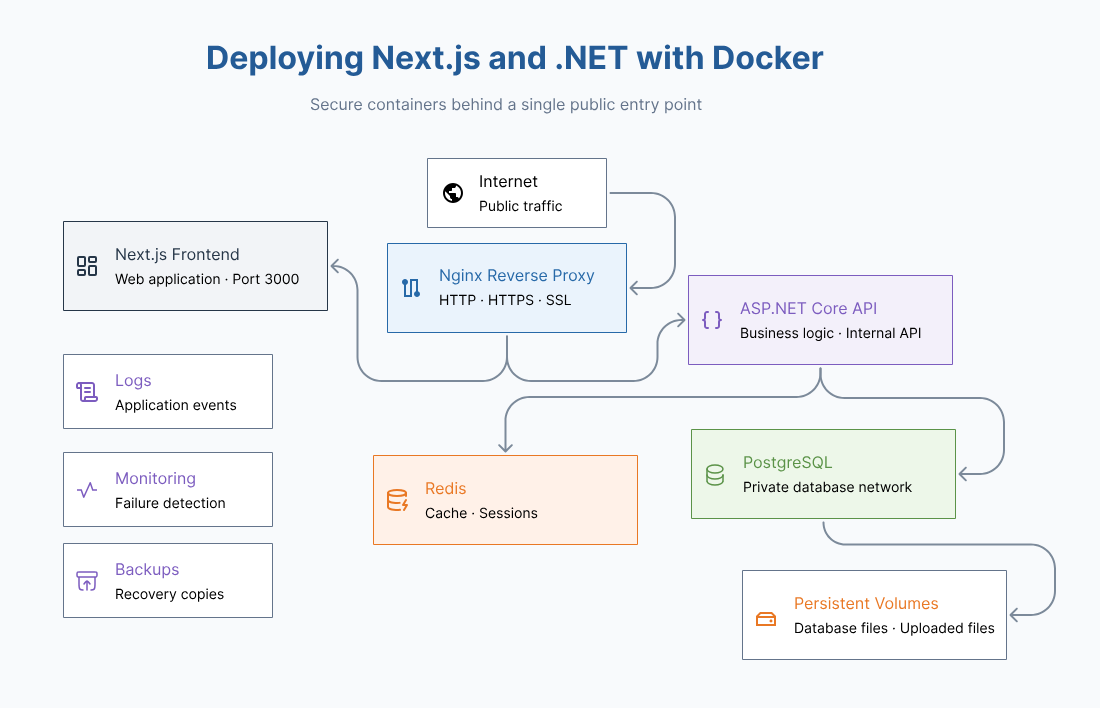
A production-oriented deployment structure using Docker, Nginx, SSL and internal-only application ports.