2 min read
Building Secure Multi-Tenant SaaS Applications
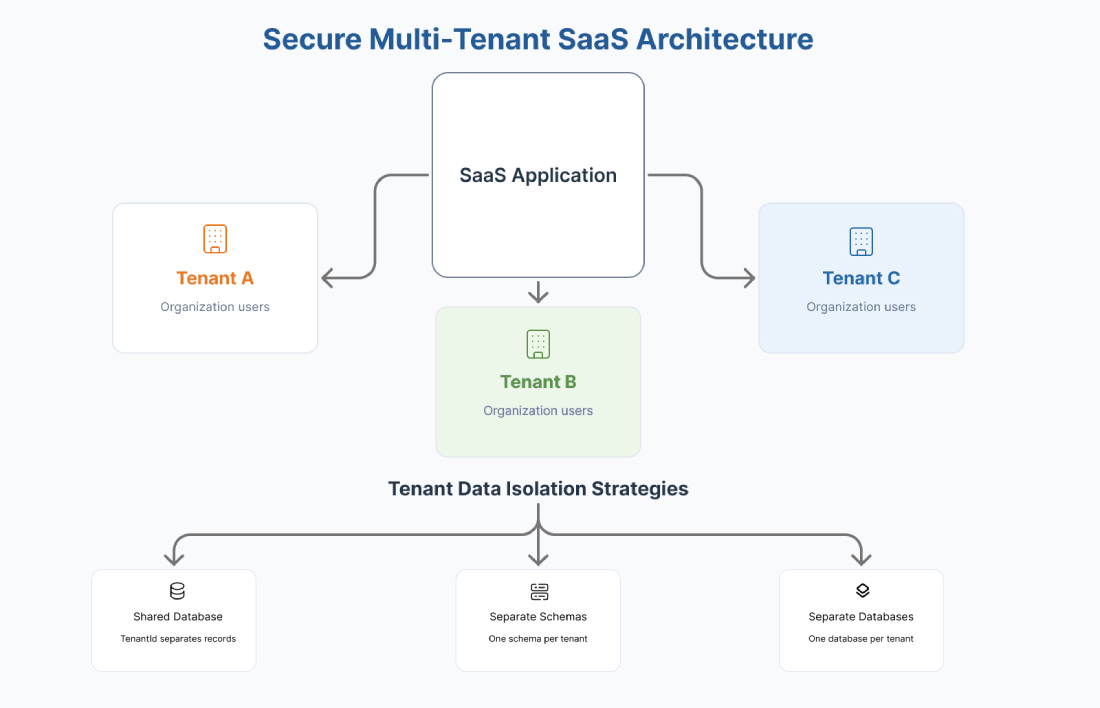
A practical look at tenant isolation, authorization, data boundaries and the mistakes that can expose customer data.
A production-oriented deployment structure using Docker, Nginx, SSL and internal-only application ports.
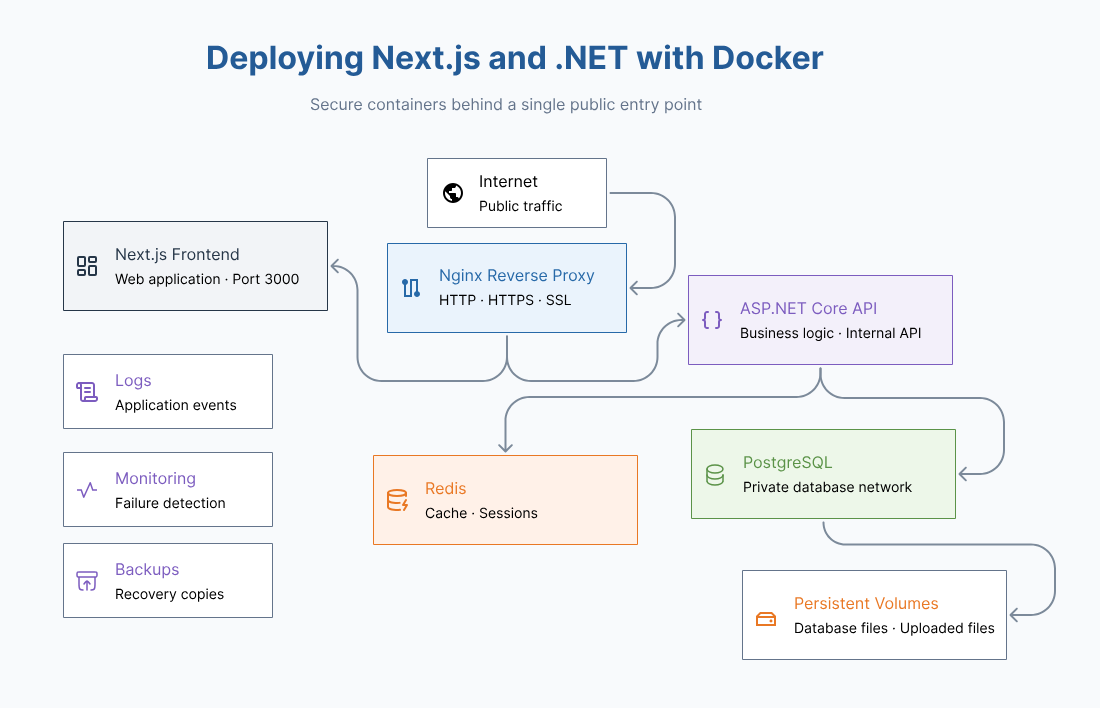
A frontend, backend and database can run on the same server without exposing every service directly to the internet. Docker networks and a reverse proxy provide a clearer and safer deployment model.
The frontend, backend, database and supporting services should run in separate containers.
This makes deployments more predictable and allows each service to have its own configuration and health checks.
Next.js, ASP.NET Core, PostgreSQL and Redis ports should normally remain inside the Docker network.
Only Nginx should accept public traffic on HTTP and HTTPS.
Nginx can route the domain to the frontend and API paths to the backend.
It can also enforce request limits, body-size limits and security headers before traffic reaches the application.
A deployment is not complete without database backups, persistent storage, application logs and a way to detect failures.
These operational concerns should be planned before the product receives real users.
Strong software architecture is not about adding the most layers. It is about protecting the boundaries that matter.
Expose only the reverse proxy publicly.
Keep databases inside a private Docker network.
Use persistent volumes for important data.
Plan backups and monitoring before launch.
Planning a related product? Explore FCODE's cloud deployment services.
Tell us what you are building and which technical problems you need to solve.
Continue reading about software architecture and delivery.
A practical look at tenant isolation, authorization, data boundaries and the mistakes that can expose customer data.
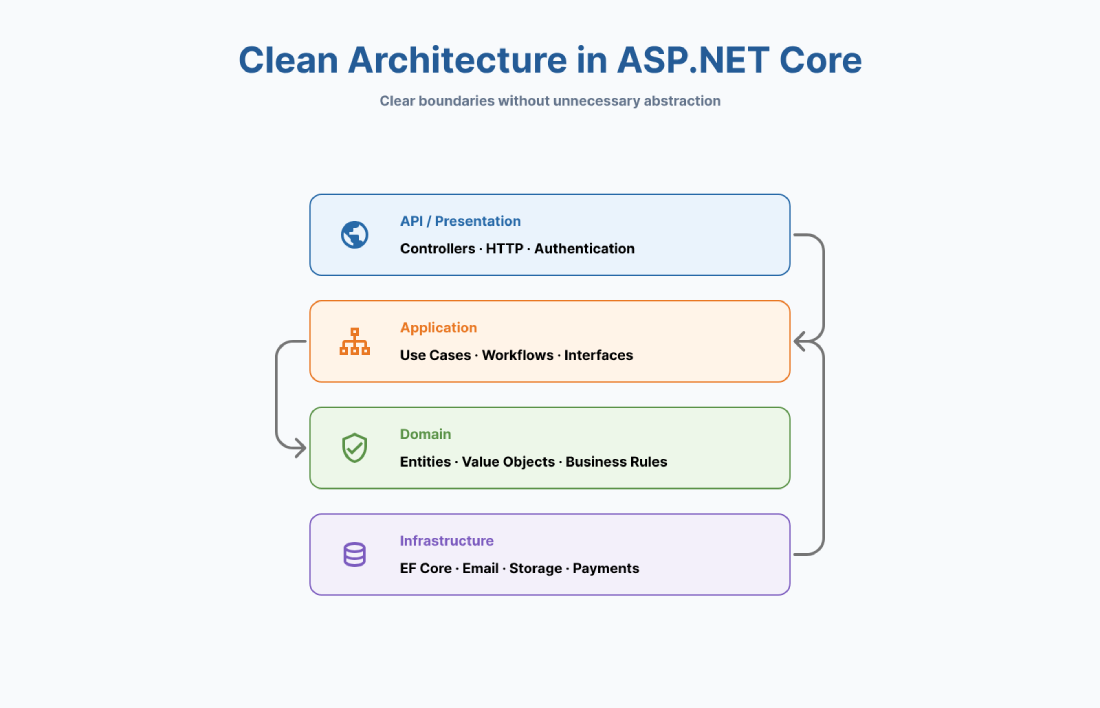
How to separate domain logic, application workflows, infrastructure and API concerns without creating unnecessary abstraction.
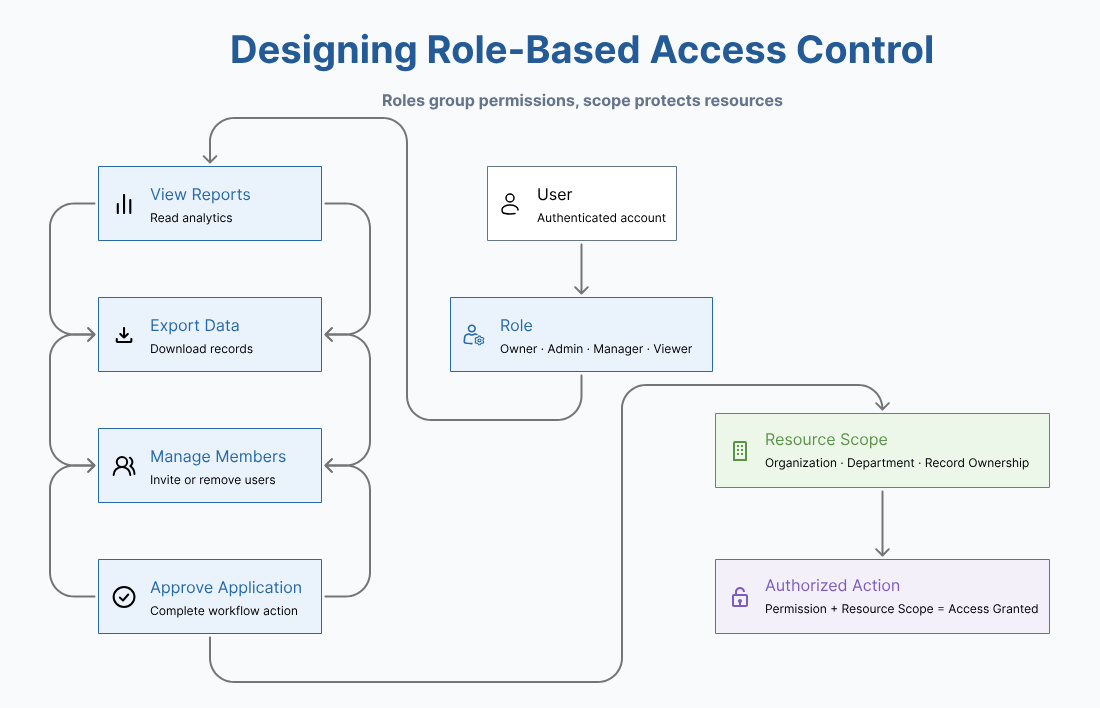
Roles are useful, but permissions provide the flexibility needed for complex business and institutional workflows.