2 min read
Clean Architecture in ASP.NET Core Without Overengineering
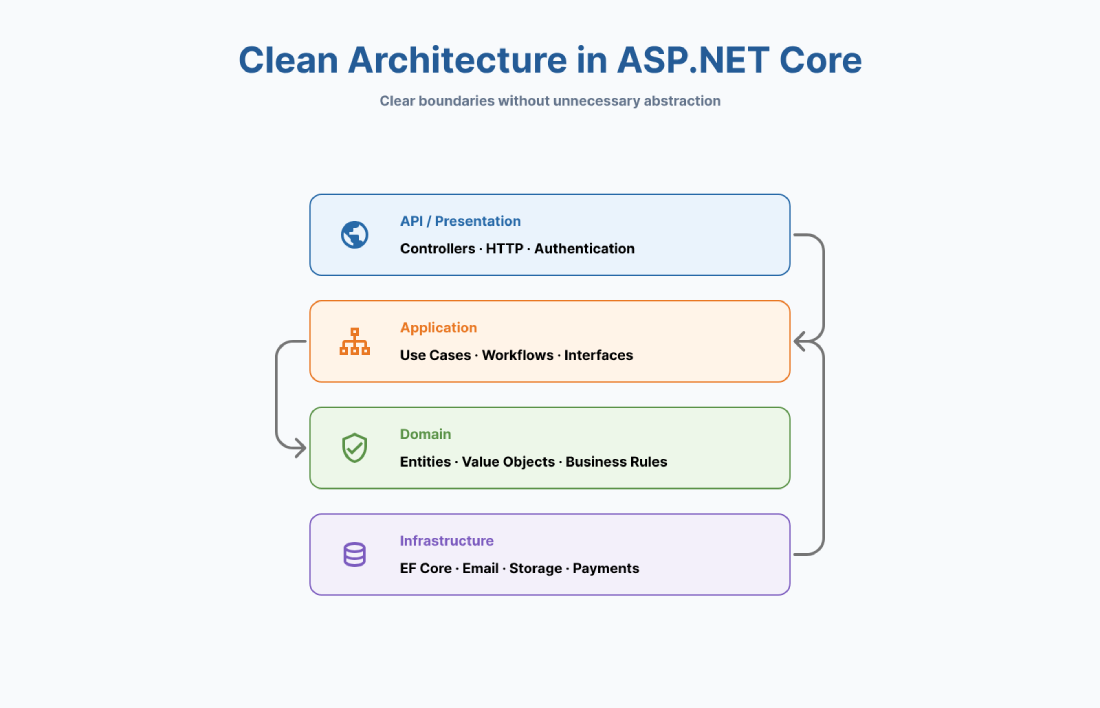
How to separate domain logic, application workflows, infrastructure and API concerns without creating unnecessary abstraction.
A practical look at tenant isolation, authorization, data boundaries and the mistakes that can expose customer data.
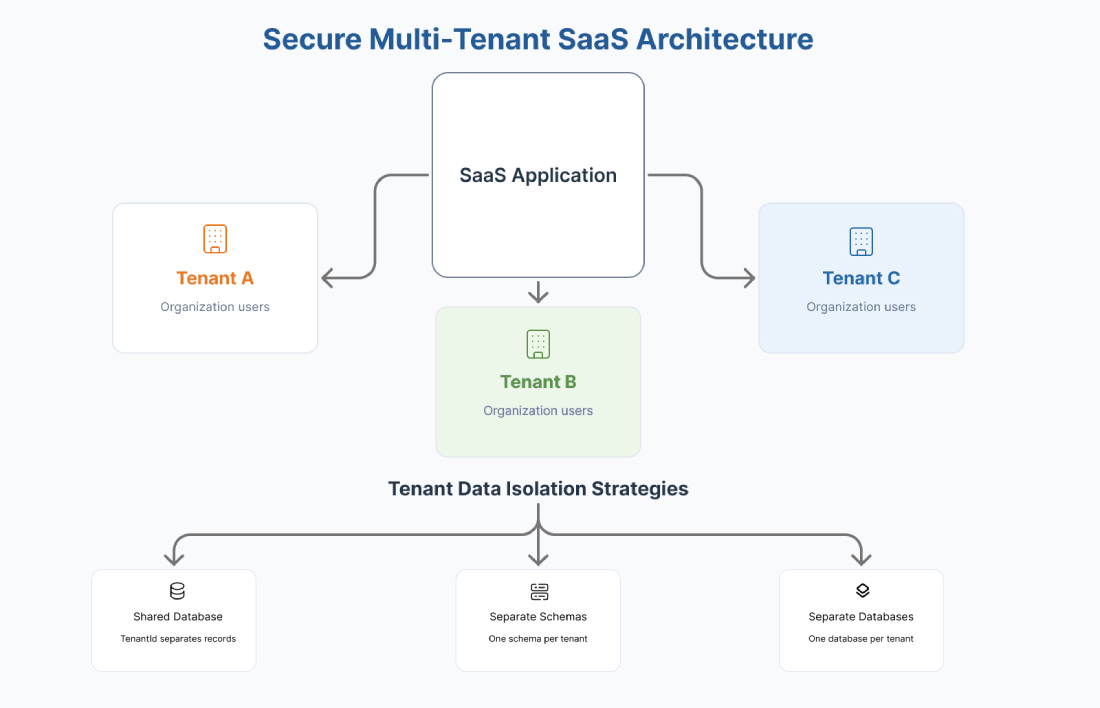
Multi-tenant SaaS products allow multiple organizations to use the same application while keeping their data completely separated. This creates important architectural and security requirements that must be addressed from the beginning.
Every authenticated request should resolve the active organization before application logic accesses tenant-owned data.
The tenant identifier should come from trusted membership information rather than directly trusting an organization identifier supplied by the client.
Filtering only inside controllers is fragile because one forgotten condition can expose data from another organization.
A safer design centralizes tenant-aware filtering through query filters, repositories or application services that always include the active tenant.
Integration tests should create data for multiple organizations and verify that users cannot read, update or delete records belonging to another tenant.
These tests are especially important for endpoints that accept public identifiers, exports, reporting ranges and file references.
Strong software architecture is not about adding the most layers. It is about protecting the boundaries that matter.
Resolve the tenant from trusted membership data.
Centralize tenant filtering instead of repeating it manually.
Apply permissions independently from tenant ownership.
Test cross-tenant access for every critical workflow.
Planning a related product? Explore FCODE's SaaS development services.
Tell us what you are building and which technical problems you need to solve.
Continue reading about software architecture and delivery.
How to separate domain logic, application workflows, infrastructure and API concerns without creating unnecessary abstraction.
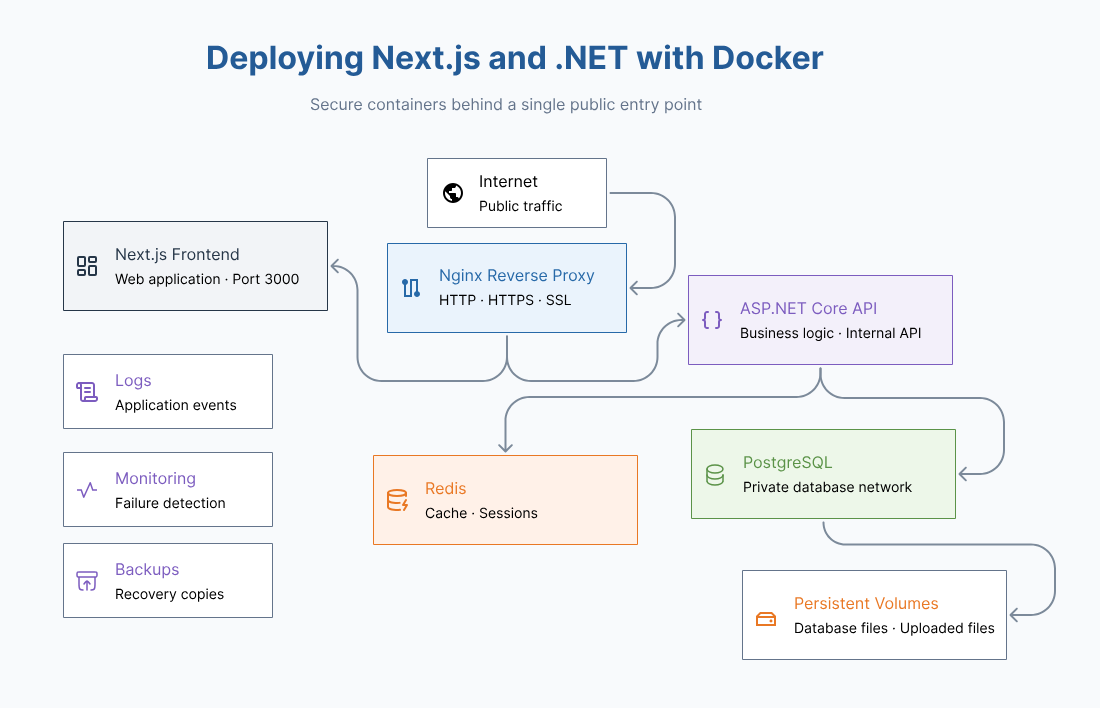
A production-oriented deployment structure using Docker, Nginx, SSL and internal-only application ports.
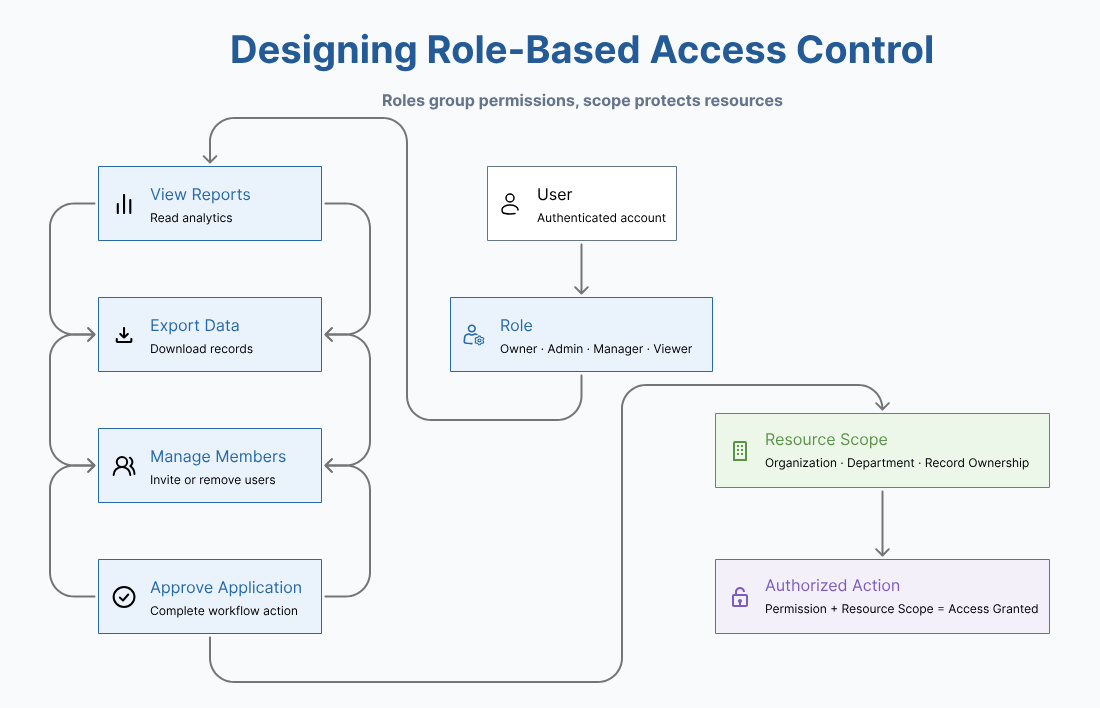
Roles are useful, but permissions provide the flexibility needed for complex business and institutional workflows.