2 min read
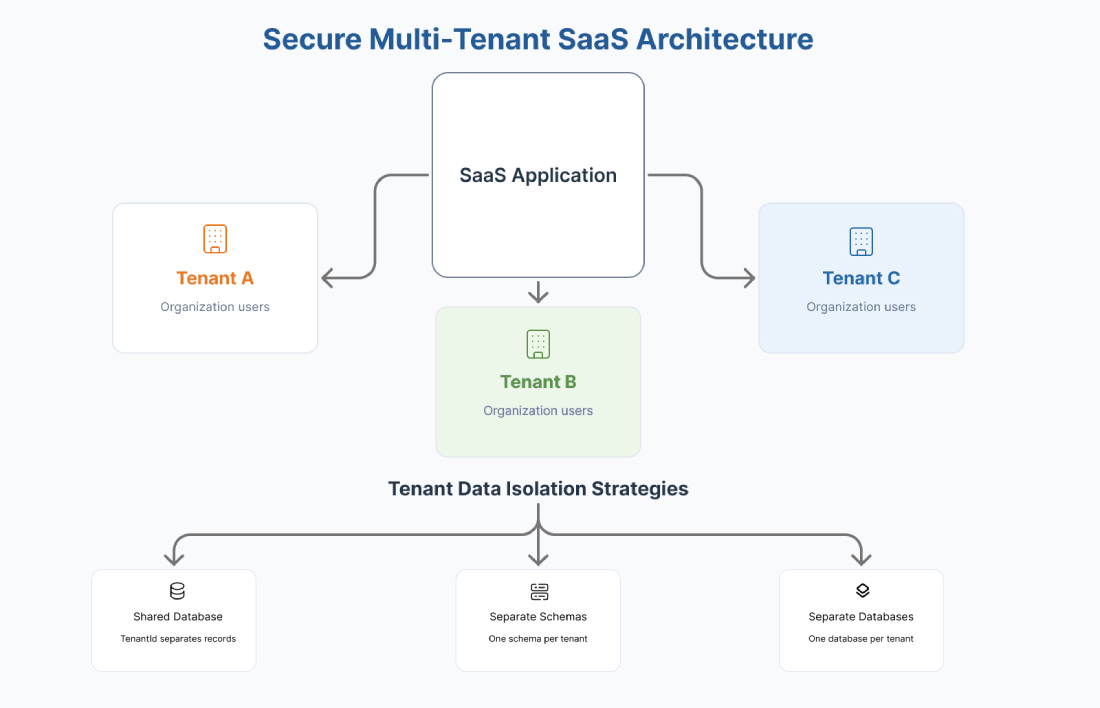
Building Secure Multi-Tenant SaaS Applications
A practical look at tenant isolation, authorization, data boundaries and the mistakes that can expose customer data.
Roles are useful, but permissions provide the flexibility needed for complex business and institutional workflows.
Business applications often start with a few roles and later develop into complex permission systems. A good authorization model should support growth without scattering role checks across the codebase.
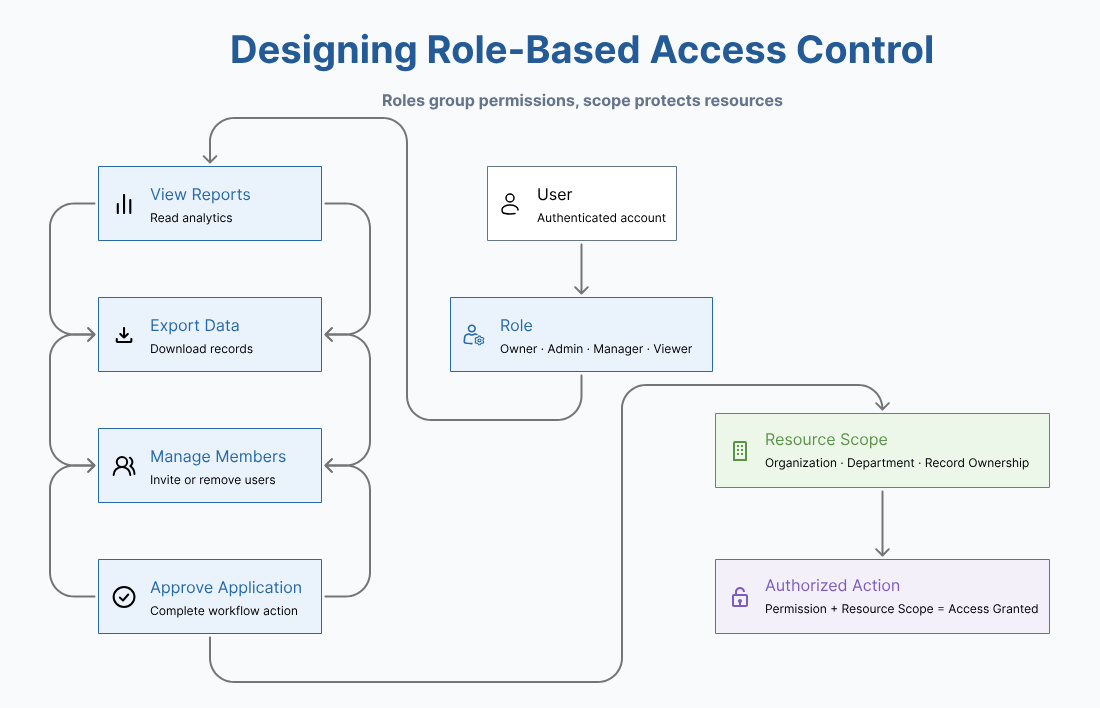
Roles are useful for grouping common responsibilities such as owner, administrator, manager and viewer.
Endpoints should still authorize the required capability rather than checking role names everywhere.
Permissions should describe what the user may do, such as view reports, export data, manage members or approve an application.
This makes requirements clearer and supports role changes without modifying controllers.
Authorization must also consider which organization, department or record the user is acting on.
Permission to update invoices does not mean permission to update every invoice in the system.
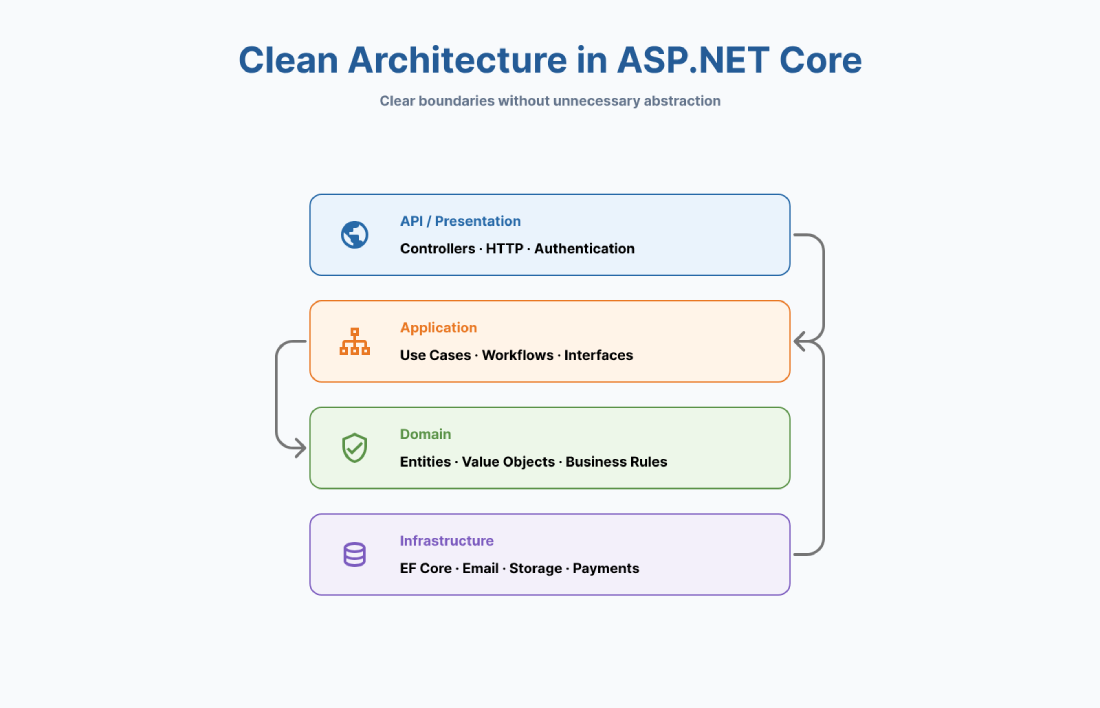
Strong software architecture is not about adding the most layers. It is about protecting the boundaries that matter.
Use roles to group permissions.
Authorize actions instead of hard-coded role names.
Combine permissions with resource ownership.
Keep authorization rules centralized and testable.
Planning a related product? Explore FCODE's custom software development.
Tell us what you are building and which technical problems you need to solve.
Continue reading about software architecture and delivery.
A practical look at tenant isolation, authorization, data boundaries and the mistakes that can expose customer data.
How to separate domain logic, application workflows, infrastructure and API concerns without creating unnecessary abstraction.
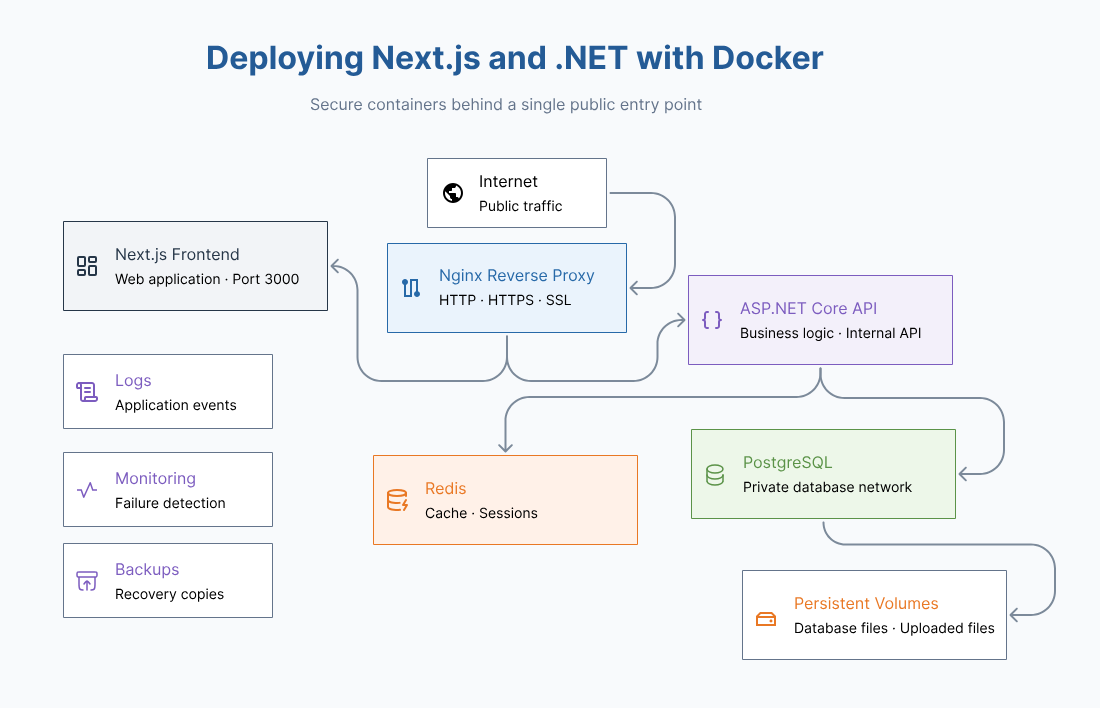
A production-oriented deployment structure using Docker, Nginx, SSL and internal-only application ports.